About the Pomodoro Timer
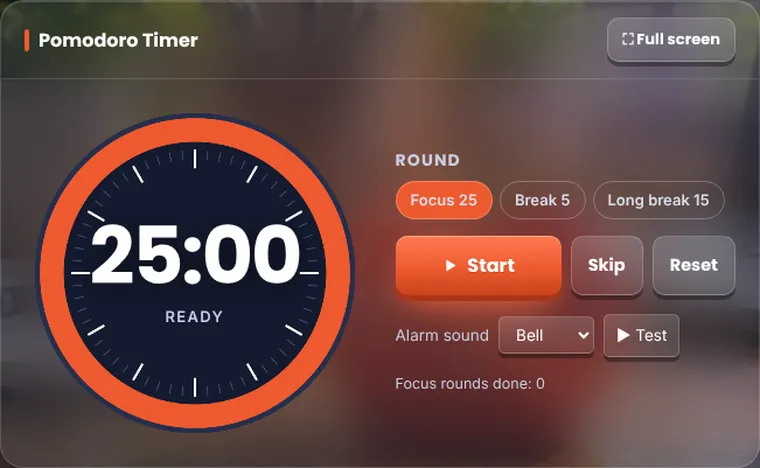
This page runs the full Pomodoro cycle for you: four focus rounds of 25 minutes, short breaks of 5 minutes and a longer break of 15 minutes.
Where the method comes from
Francesco Cirillo developed the Pomodoro Technique in the late 1980s while he was a university student. He used a tomato shaped kitchen timer, and pomodoro is Italian for tomato. Each focus round is called one pomodoro.
Tips for better rounds
- Write the task for each round before you start
- If an idea pops up, note it and return to the task
- Use breaks to move, not to scroll
- Count rounds to see how long tasks really take
Change the rhythm
If 25 minutes feels too short, try a 45 minute timer with a ten minute break. If it feels too long, start with a 15 minute timer and build up.
What to do in a break
- Stand up, stretch and walk around the room
- Drink a glass of water
- Look out of a window to rest your eyes
- Avoid email and social media so the break stays a break
Who the method helps
Students use focus rounds to revise without burning out, writers use them to get words on the page, and developers use them to protect time for hard problems. Counting rounds also shows how long tasks really take, which helps with planning the next day.
Quick ideas
- Study with planned breaks
- Write or code without distractions
- Beat procrastination
- Track focus sessions in a day
How to use it
Press Start. The orange ring shrinks as time passes and the time left also shows in your browser tab, so you can see it while you work in another tab. Press Pause to stop and Resume to carry on. When it reaches zero, the alarm plays and the numbers flash.
Related tools
Frequently asked questions
How does this Pomodoro timer work?
It runs 25 minutes of focus, then a 5 minute break. After four focus rounds you get a 15 minute break. It switches on its own.
Can I skip a break?
Yes. Press Skip to move to the next round.